Meeting Part L With a Continuous Thermal Layer
Part L has put far more emphasis on how every floor is designed and detailed, and architects are now expected to deliver more thermal performance from the same limited space. Poured floor insulation offers a straightforward way to achieve reliable thermal performance, slimmer constructions and more responsive underfloor heating, without the disruption and waste that comes with cutting rigid boards around every service.
Meeting Part L With a Continuous Thermal Layer
Traditional PIR or rigid boards look strong in a specification, but on site they are slow to install, awkward around services and almost impossible to lay without gaps. Every cut‑out, off‑cut and stepped area risks leaving slivers of exposed slab that undermine your carefully modelled U‑values. Poured insulation tackles this by creating a continuous thermal layer across the entire floor, flowing into every corner and around pipework to reduce heat loss.
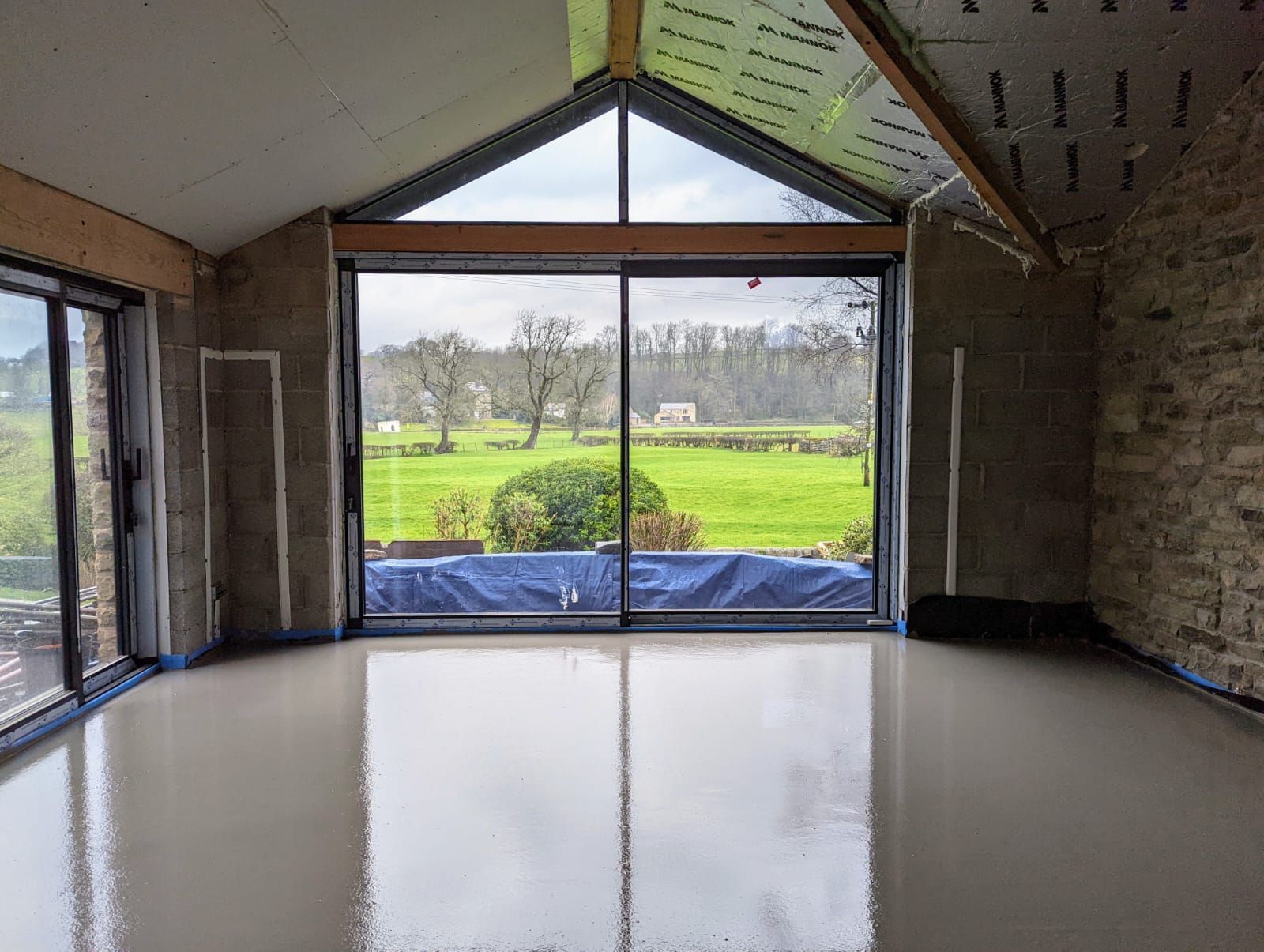
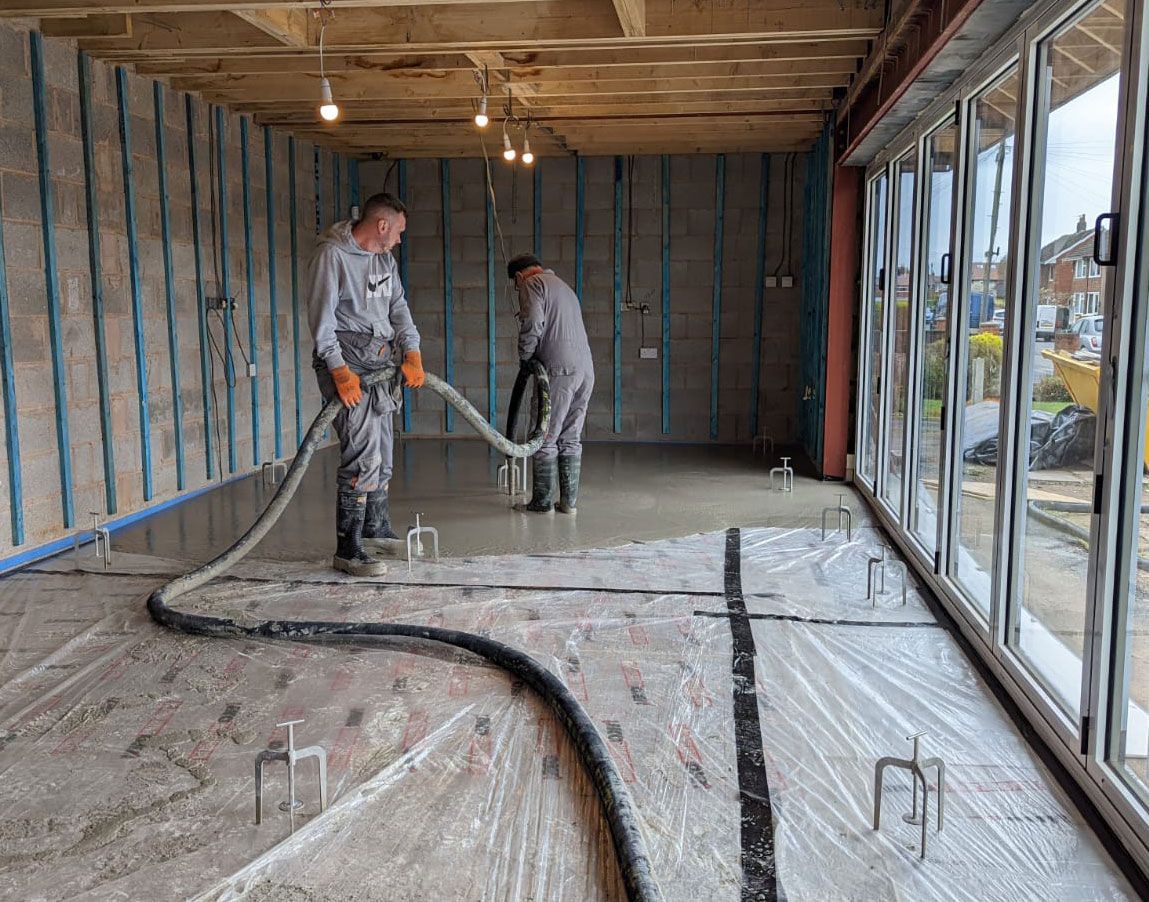
Clockwork Screed’s systems, including Energy Store TLA and Aeromix, are liquid, self‑levelling materials that are pumped into place over ground or intermediate floors. Once installed, they form a seamless insulating layer that removes the cold bridges left by imperfectly fitted boards and helps retain heat in rooms for longer. For Part L calculations, that means the real‑world floor build‑up is far closer to the assumed model, giving you more confidence that fabric targets will be met.
Underfloor heating performance benefits directly from this approach. Poured insulation offers impressive thermal conductivity figures, with Energy Store TLA quoted as low as 0.043 W/mK and Aeromix delivering world‑leading insulation values of 0.037 W/mK. Pipes sit above a uniform, gap‑free layer, so heat rises into the screed and room rather than escaping through voids or down into the structure.
Thinner, Lighter Floor Buildups Without PIR
As floor zones become more congested, achieving performance within limited depth is a recurring challenge. Aeromix in particular has been designed to help you do more with less, combining ultra‑low density with strong mechanical performance. With a density as low as 93 kg/m³ and a minimum compressive strength of 100–110 kPa, it can replace traditional board‑and‑screed combinations with a thinner, lighter, high‑performance layer.
This opens up specification options on both new build and refurbishment schemes. Aeromix can be installed from just 30 mm, directly onto hardcore, over concrete slabs or on beam and block, reducing reliance on multiple layers and thick PIR boards beneath underfloor heating. Its self‑levelling finish creates a smooth, consistent base for the screed above, supporting a more responsive heating system and helping you protect finished floor levels.
For intermediate floors in commercial projects, the benefits are multiplied. The combination of low weight, thermal performance and acoustic benefit can cut demands on structural design and reduce the need for additional acoustic treatments. That helps design and build contractors balance structural loads, buildability and compliance without constantly trading performance against depth.

Sustainability: Less Waste, Less Cement, Fewer Journeys
Beyond pure performance, poured insulation supports low‑carbon project goals at several points in the process. On a traditional board installation, insulation has to be delivered, stored flat and protected from damage, then cut and fitted piece by piece, generating off‑cuts and non‑recyclable waste. In contrast, poured systems are batched on a mobile screed factory and pumped straight into place, producing only what the project actually needs.
Because Aeromix can be applied directly to hardcore, it can reduce the overall cement content in the floor build‑up, taking out the need for an extra concrete slab beneath the insulation layer. Fewer layers, fewer lorry movements and less packaging all contribute to lower embodied carbon and a cleaner site. With Clockwork Screed able to pump up to 1,000 m² of Aeromix per day, projects also benefit from compressed programmes and less time running plant and site infrastructure.
For clients who expect both operational and embodied carbon reductions, this combination is powerful. A continuous, high‑performance thermal layer improves in‑use energy efficiency, while on‑site batching and lean material use help to cut the carbon impact of construction itself. The result is a floor build‑up that supports Part L, aligns with wider sustainability strategies and still works for contractors and trades on site