What Screed is Right for You and Your Underfloor Heating?
maximise the efficiency of your underfloor heating system.
When it comes to creating a comfortable and energy-efficient living space, underfloor heating is an increasingly popular choice. It provides uniform warmth, reduces energy consumption, and eliminates the need for radiators, making your interior both cosy and aesthetically pleasing. However, the success of your underfloor heating system largely depends on the type of screed you choose. At Clockwork, we are specialists in insulation, underfloor heating and liquid screeding, and we understand the importance of selecting the right screed for your project. Here, we'll examine the various screed options and assist you in making an informed choice to maximise the efficiency of your underfloor heating system.
Understanding Screeds
Screeds are essentially the thin top layer of a flooring system that provides a level and smooth surface for your final floor covering, whether it's tiles, hardwood, or any other material. They also play a crucial role in the performance of underfloor heating systems by efficiently conducting and distributing heat. There are three types of screeds commonly used in underfloor heating installations: traditional sand and cement screed, anhydrite screeds and cement-based liquid screeds.
1. Traditional Sand and Cement Screed
This type of screed is a tried-and-true option that has been used for many years. It consists of a mixture of sand, cement, and water and is applied as a semi-dry mortar. Traditional screed is known for its strength and durability, making it suitable for high-traffic areas. It can also accommodate various floor finishes. However, it has longer installation and drying times compared to other options, which can delay your project's completion. This type of screed will not encapsulate UFH pipework, leaving air voids which can reduce the efficiency of your underfloor heating system.
2. Anhydrite Screed
Anhydrite screed is a calcium sulphate-based screed that is well established and widely used in underfloor heating installations. It offers good thermal conductivity and, like any liquid screed, can be poured directly over underfloor heating systems. Anhydrite screed has a faster drying time compared to traditional sand and cement screed but does have some drawbacks. These types of screed creates a ‘laitance’ on the surface which would require sanding prior to any floor finish being installed. Added to this, gypsum based screeds can’t be used in any areas where contact with water is possible, so they are not recommended for kitchens or bathrooms.
3. Cement based Liquid Screed
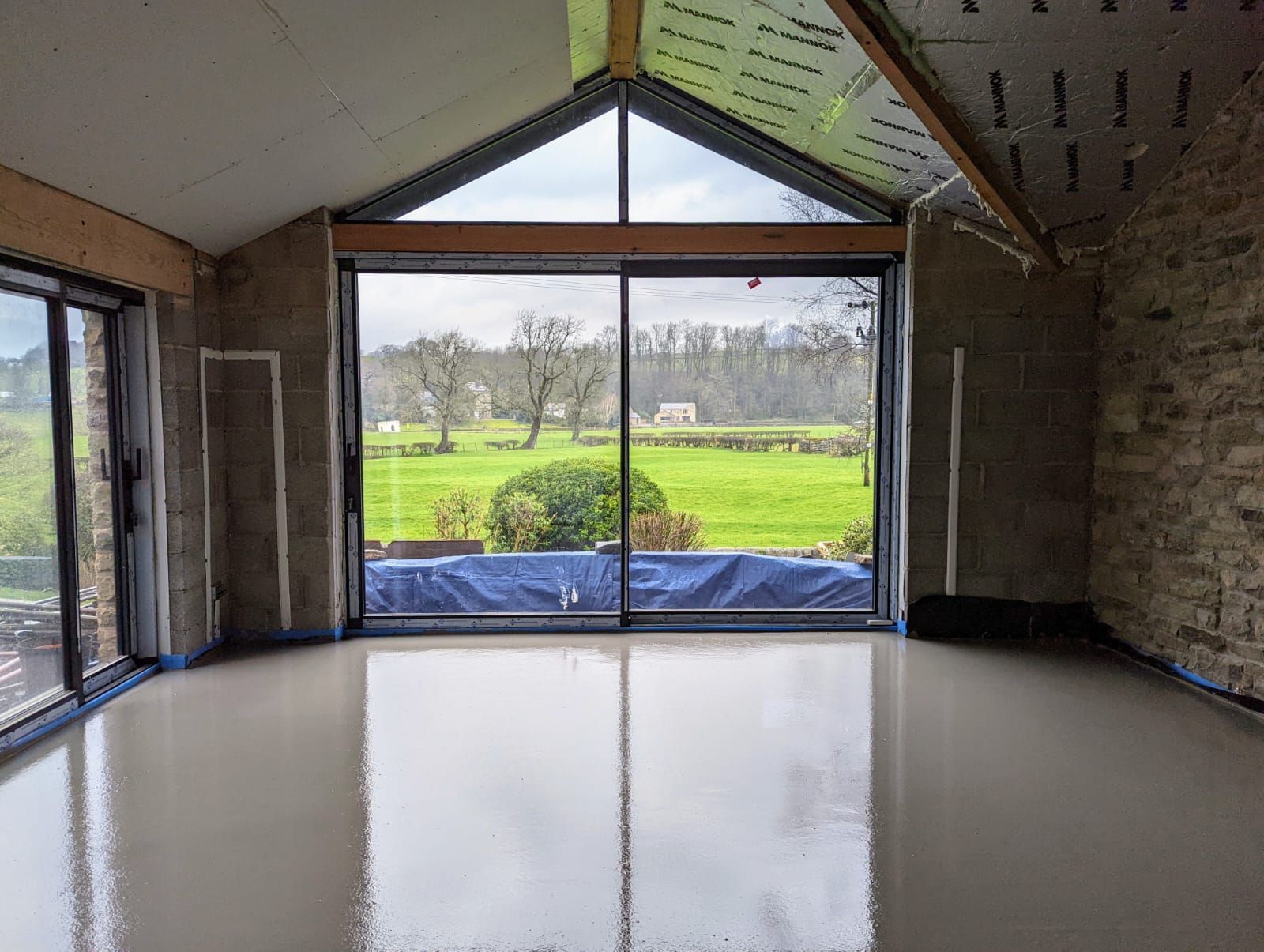
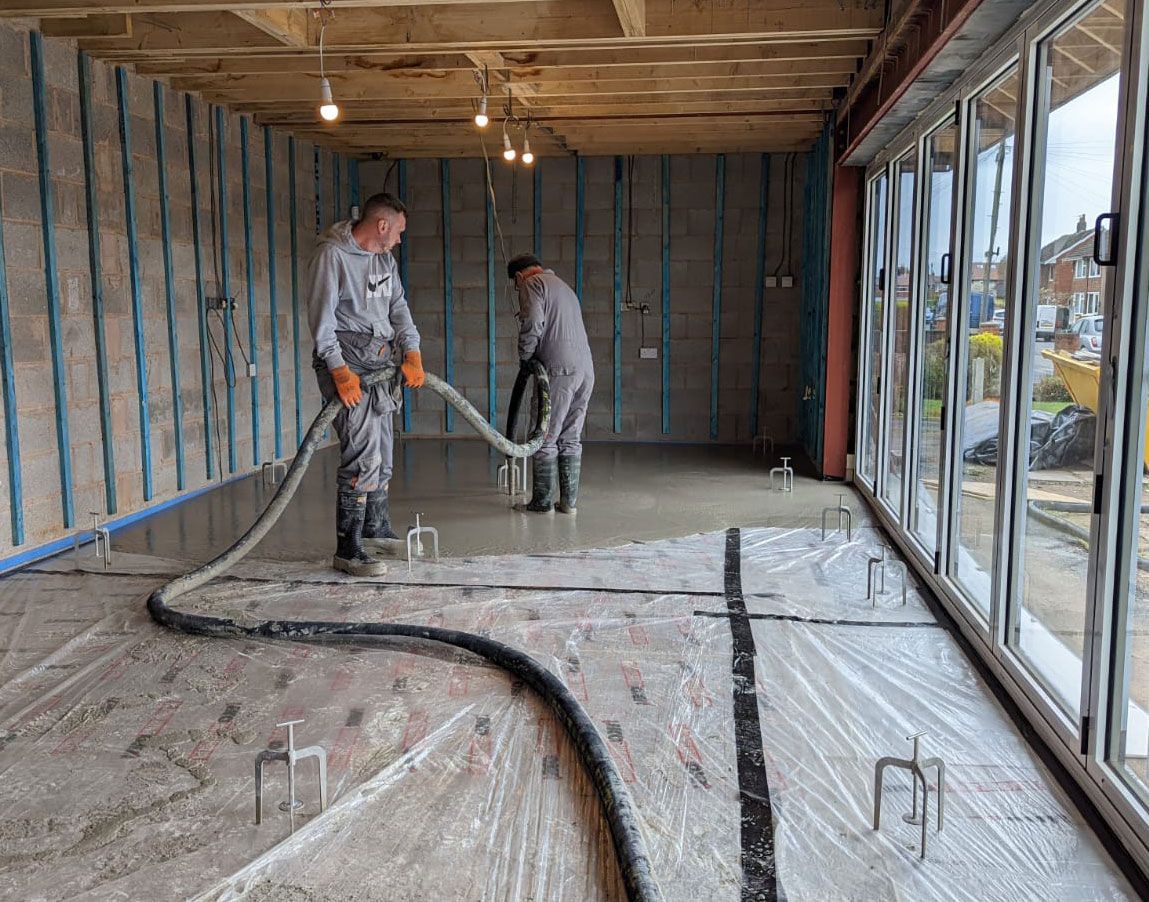
Cement based liquid screeds is the best of both worlds. Boasting the robustness of traditional sand and cement screeds as well as the flowing, liquid properties of anhydrite screeds, these solutions are tailor made for UFH sytems.in . It consists of a blend of cement, sand, water and a specialised binder. The screed is poured directly onto the underfloor heating pipes or insulation to pre-set levels and then dappled to create a smooth surface. One of its significant advantages is its rapid drying time, which allows for quicker project completion. It also provides excellent thermal conductivity, enhancing the efficiency of your underfloor heating system.
Choosing the Right Screed for Your Underfloor Heating
The choice of screed for your underfloor heating system should be based on several factors, including your project's requirements, budget, and time constraints. At Clockwork, we take a holistic approach to underfloor heating installations by considering your unique needs and providing comprehensive solutions.
Our process begins with an assessment of your space and heating requirements. We offer a monolithic insulation solution, Aeromix. This is a high-performance, poured insulation material which will remove any unevenness in the sub-floor whilst reducing the energy lost from thermal bridging which is typically associated with conventional PIR board. This layer of insulation helps to enhance the efficiency of your underfloor heating system. Proper insulation ensures that heat is directed upwards, minimising heat loss into the subfloor.
Once the insulation is in place, we use CAD (Computer-Aided Design) systems to design the most efficient underfloor heating system for your space. This ensures even heat distribution and optimal comfort throughout your building.
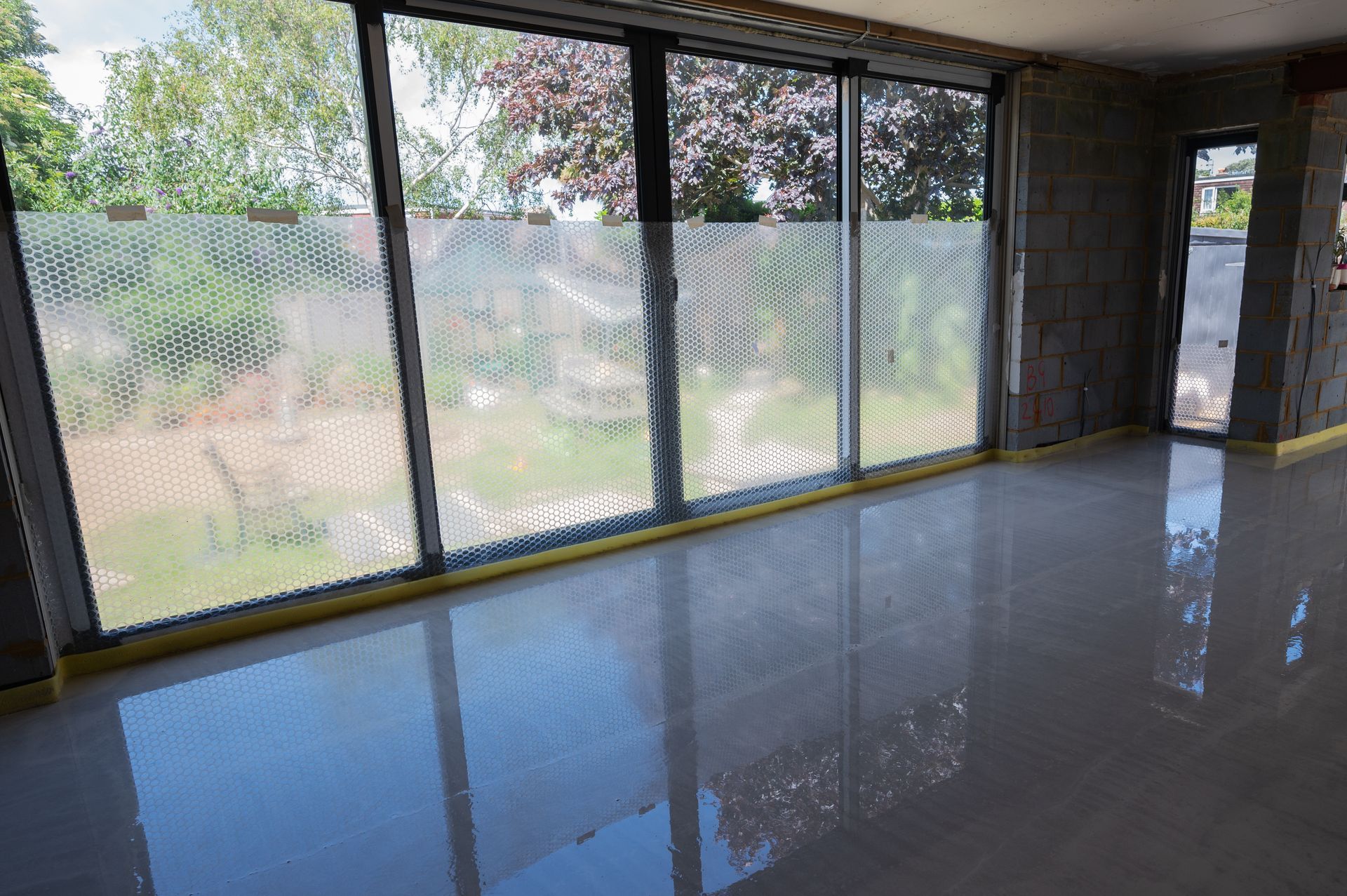
Finally, we supply and install high-performance cementitious liquid floor screeds designed for use with underfloor heating. They are easy to apply, and our team can cover 1000m2 a day, which helps reduce timing and costs.
We can install up to 100m2 without joints if underfloor heating is fitted and 150m2 if not. Unlike calcium sulphate (or anhydrite) screeds, cementitious options can be used in any area of a project (including outdoor and areas that will be exposed to wet conditions) and fast-drying options allow footfall within 24 to 48 hours. We have the expertise to install it to the highest standards.
Selecting the right screed for your underfloor heating system is essential for achieving comfort and energy efficiency in your home. At Clockwork, we not only specialise in underfloor heating and screeding but also provide insulation solutions and use CAD technology to design bespoke underfloor heating systems. With our expertise and commitment to excellence, we can help you create a warm and inviting space that meets your unique needs and preferences.
To learn more about our services and how we can transform your property with underfloor heating and screeding, visit our website at https://www.clockworkscreed.co.uk/. Our team of experts is ready to assist you in making the right choices for your project, from insulation, and underfloor heating to screed!
Clockwork Screed provides Insulation and liquid screed solutions whilst our sister company Clockwork UFH are underfloor heating specialists.


Key performance criteria when selecting screed for underfloor heating
Screed thickness
The thickness of screed installed with underfloor heating will impact the performance of the UFH system.
- For traditional sand and cement screeds, the screed thickness should be between 65mm and 75mm to provide sufficient thermal mass and structural integrity
- The thickness of anhydrite screed with underfloor heating typically ranges from 40mm to 60mm for optimal performance and heat distribution
- Clockwork Screed’s cementitious liquid screed can be laid as thinly as 25mm, which heats the room more quickly, enhances drying times and minimises energy consumption and costs.
Screed durability and strength
Durability and strength are key performance criteria when choosing screed for underfloor heating. The screed should be able to withstand the traffic and loads expected of the space in which it is installed.
When installed with underfloor heating, the screed should be strong enough to withstand rapid temperature changes to prevent cracking.
The screed’s shrinkage rate is another indicator of its durability and strength. Clockwork Screed’s liquid screed offers an impressive shrinkage rate of 0.05%.
Other properties to consider when determining a screed’s durability are its compressive strength, bond strength and moisture content.
Thermal conductivity
The screed must have sufficient thermal conductivity to quickly transfer heat from the underfloor heating pipes to the floor surface, and then distribute the heat evenly throughout the room. Liquid screed offers exceptional thermal conductivity, partly because its liquid consistency covers underfloor heating pipes without producing voids from which heat could escape.
Drying and curing
Screeds that cure and dry quickly allow for faster project turnarounds. Liquid screeds dry and cure significantly faster than traditional or anhydrite screeds.
Common mistakes and how to avoid them
Common mistakes when selecting and applying screed for underfloor heating include:
- Inadequate preparation of the subfloor
- Screed that is too thinly or thickly applied
- Inadequate insulation to ensure the efficiency of the underfloor heating system
- Poor mixing of the screed components
- Drying the screed too quickly using the UFH system, dehumidifiers or other artificial means
- The absence of a dampproof membrane (DPM) which can lead to the corrosion of the foil underneath the pipework.
These common mistakes can be avoided by meticulously following the manufacturer's guidelines, carefully planning the entire project, providing enough time within the project for the screeding process to be completed correctly, or by hiring Clockwork Screed as your professional screed installation company.
Installation best practice for screeds over underfloor heating systems
When installing screed over underfloor heating systems, attention should be given to the following factors:
- For an even screed floor finish, the subfloor must be clean, smooth and flat before the UFH is installed and screed is applied. Liquid screed self-levels which saves time and labour, but the subfloor must be sufficiently prepared to deliver the required finish
- The UFH pipes must be securely fixed to prevent them from floating in the screed
- The screed should be left to dry for 7 days before switching on the UFH system to avoid cracking. Begin by setting the UFH to its lowest temperature, then gradually increase the temperature over the next few days.
- For cementitious liquid floor screeds, a floor covering can be applied when moisture levels have sufficiently reduced to 2.5%CM. For anhydrite screeds the moisture level must be 0.5%CM.
Selecting a trusted screed contractor or installer
When selecting a screed contractor or installer it is advisable to research reviews and testimonials from other customers to determine their level of expertise and quality of work. Checking for industry accreditations and certifications will also give you peace of mind you will be dealing with a professional contractor. The screed installer should also be adequately insured against accidents or other issues that may occur during their time on the project.
A trustworthy screed installer will be able to provide a detailed breakdown of costs and a clear project timeline, backed by quality assurances and warranties.