PIR vs Poured Insulation: Which Floor Build Up Works Best for Your Project?
Choosing between PIR boards, poured insulation and hybrid build ups for better floor performance, easier installation and more predictable project costs.
Getting the floor build-up right is one of the most important decisions in any modern build. It affects energy performance, comfort, programme, and how easy life is for everyone on site, from groundworkers to screeders and UFH installers. In recent years, more contractors and self-builders have started questioning whether traditional PIR boards are still the best option, or whether poured insulation and hybrid build-ups can deliver better results. This article looks at three main approaches to floor insulation, PIR boards, poured insulation, and hybrid solutions, and where each one genuinely makes sense.
The three main floor insulation options
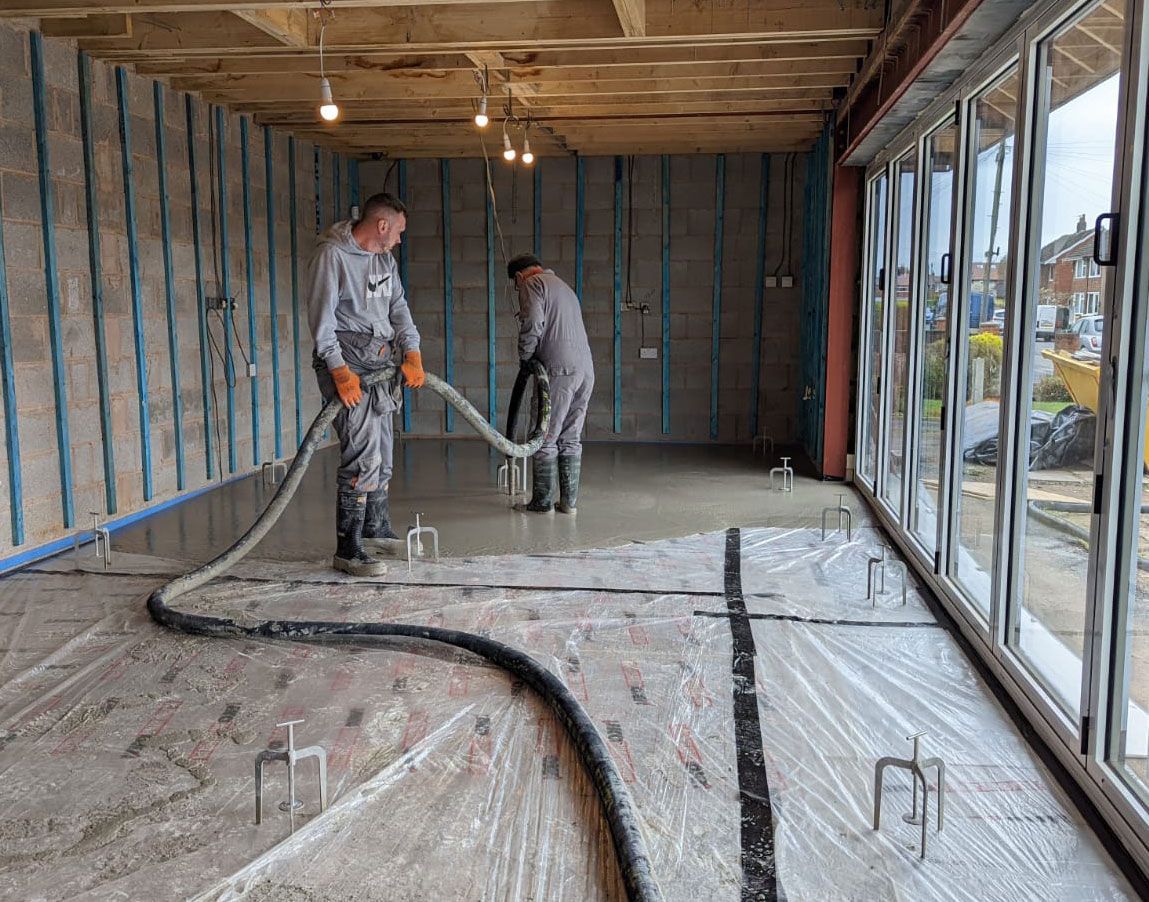
Before we compare them, it helps to define what we mean by each approach. PIR boards are rigid insulation boards laid manually over the slab or hardcore, cut and fitted around services, with a separating layer and screed or concrete on top. Poured insulation is a thermally efficient, free flowing insulation material (such as a foamed or bead based system) pumped and levelled across the floor to create a continuous, seamless layer. Hybrid build ups combine rigid boards and poured insulation, for example, boards used where levels are predictable, with poured insulation used to level tricky areas, infill around services, or eliminate gaps. Each option can work well, but they suit different project types, tolerances, and performance targets.
Thermal performance and cold bridge risk
Energy performance is often the first question clients ask, but it is not just about declared lambda values on a datasheet. PIR boards can deliver strong U values on paper, but only if they are installed perfectly, with tight joints and minimal gaps. In reality, cutting around pipes and services often leaves voids that reduce real world performance. Poured insulation creates a continuous layer with no board joints and far fewer opportunities for cold bridging. It flows around services and into irregularities, helping the floor behave more like a single insulated element. Hybrid solutions sit in the middle. Boards can be used where large flat areas are easy to insulate, with poured insulation used to seal edges, transitions, or complex zones where gaps are more likely. For fabric first projects where every watt matters, reducing cold bridge risk can be just as important as the nominal insulation thickness.

Installation speed and on site practicality
Programme pressure is one of the biggest drivers behind changing floor build ups. PIR boards are labour intensive. Boards must be carried in, laid, cut, and taped, and any uneven substrate usually means extra time spent levelling or packing; on multi plot sites, this can quickly add up. Poured insulation is pumped into place quickly, levels itself, and can accommodate uneven substrates without extensive preparation. Large areas can often be completed in a fraction of the time it takes to cut and lay boards. Hybrid systems can remove headaches in just the tricky areas, for example, using poured insulation to build up low spots, deal with dips in the slab, or tidy up around service penetrations before boards go down elsewhere. For busy sites and tight timelines, the ability to insulate and level in a single operation is a significant advantage.
Waste, handling, and site logistics
Every extra pallet on site has a cost in time, money, and space. PIR boards generate offcuts, especially around corners and services. These often cannot be reused and end up as waste, which clients increasingly notice on both cost and sustainability grounds. Poured insulation arrives in bulk and is pumped directly to where it is needed. There is far less physical handling, and no stack of offcuts to dispose of at the end of the job. Hybrid solutions allow you to use boards efficiently in simple, repeatable areas while relying on poured insulation to reduce waste where cutting would otherwise be complex and time consuming. On constrained sites, reducing manual handling and waste can make day to day operations noticeably smoother.
Tolerance to uneven substrates and tricky details
Few slabs or sub bases are perfectly flat in the real world. PIR boards expect a relatively even surface. If the substrate varies in level, boards can rock, leave voids underneath, or require extra work to build up low areas. Poured insulation is well suited to irregular slabs and hardcore. It can bring levels back to where they should be while also providing insulation, simplifying the overall build up. Hybrid approaches are useful in refurbishments or extensions where old and new floor areas meet at different levels. Poured insulation can be used to blend transitions, with boards used in standard zones. The more complex the site conditions, the more attractive a fluid, gap free material becomes.
Cost predictability and value, not just headline price
On paper, PIR boards can sometimes look like the cheaper option per square metre, but headline material cost is only part of the picture. PIR boards can incur hidden costs: extra labour time, rework when levels are not right, and the risk of corrective work if performance or finish is not up to scratch. Poured insulation may have a higher material cost per square metre in some scenarios, but the speed of install, reduced labour, and lower risk of remedial work can make the total package more competitive. Hybrid systems give you the flexibility to choose where to invest. You can use poured insulation strategically where it unlocks programme or buildability benefits, and keep boards where they still make sense. For developers and self builders alike, the question is often: what gives the most predictable outcome for the budget and timescale we actually have?
Which solution suits which project?
While every job is different, certain patterns crop up again and again. Volume housebuilders on tight budgets are often still leaning on PIR as the base option, but are increasingly open to poured insulation or hybrid build ups on plots or blocks where speed, access, or level variations are causing delays. High end self build or low energy projects are frequently better served by poured insulation or hybrid solutions that minimise cold bridging and support underfloor heating performance, while keeping the floor build up as slim and efficient as possible. Commercial, retrofit, and mixed age buildings tend to have the most challenging existing slabs and level differences. Poured insulation, either alone or as part of a hybrid approach, can simplify levelling, maintain headroom, and make follow on trades lives easier. The right answer is rarely one size fits all. It depends on performance targets, site constraints, and how much risk the project team is willing to carry.
Bringing an expert in early
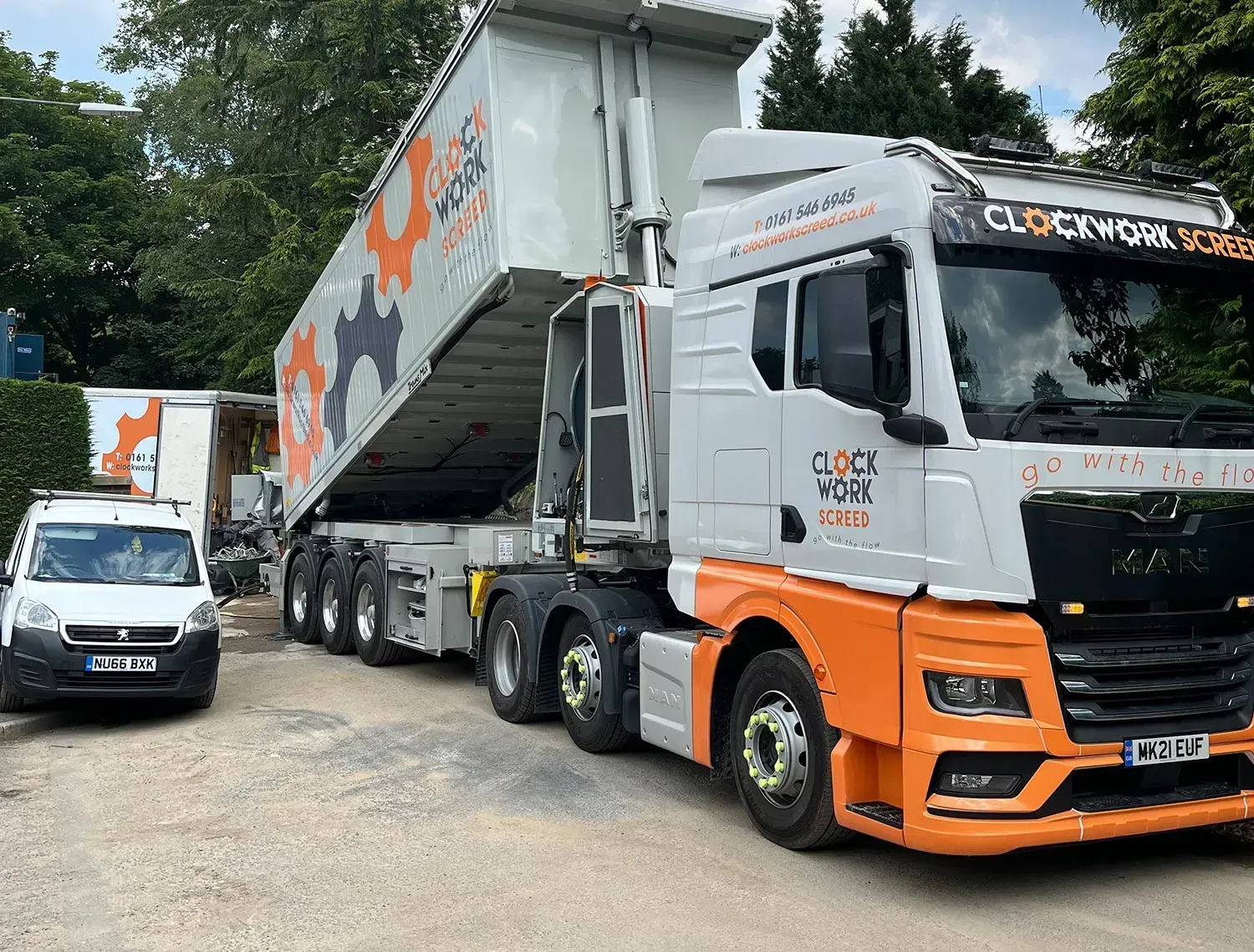
Choosing between PIR boards, poured insulation, and hybrid solutions is not just a specification exercise. It is a practical decision with real consequences for programme, performance, and cost. Bringing a specialist in early to review drawings, build ups, and site conditions can help you avoid costly surprises later on. Clockwork Screed can review your proposed floor construction, talk through the pros and cons of each approach for your specific project, and recommend a build up that balances performance, practicality, and budget. Sometimes that will mean poured insulation throughout; sometimes it will mean a hybrid; and occasionally, traditional boards will still be the right tool for the job. If you would like to sense check your plans or explore alternative build ups, share your drawings and floor details, and get tailored advice before anything goes on the ground.