Getting Screed Where It’s Hardest to Reach: Access and Pumping on Tough Sites
Getting Screed Where It’s Hardest to Reach: Access and Pumping on Tough Sites
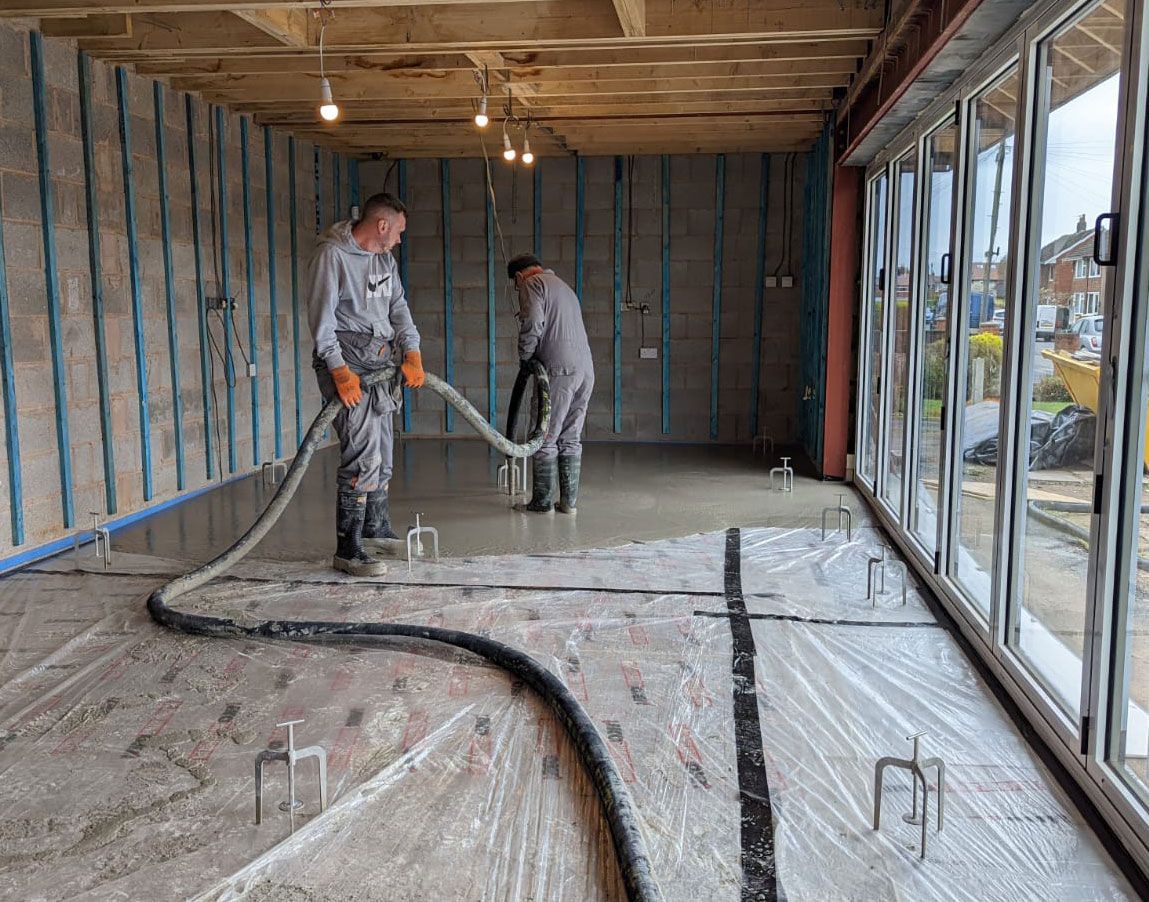
Access is often the first hurdle on any project, and it can turn a straightforward screed job into a logistical headache. Traditional methods bringing screed in by lorry, then wheeling or pumping it manually across the site, become especially problematic on tight urban plots, back‑to‑back terraces, multi‑storey buildings and live‑site refurbishments. At Clockwork Screed, the mobile screed plant and flexible pumping setup are designed specifically to solve those access issues, with the ability to pump liquid screed up to 100 m from the truck location. That reach makes it possible to cover awkward sites cleanly, efficiently and without disruptive vehicle movements across finished areas.
On a typical restricted‑access site, conventional screed delivery can quickly become a source of frustration. Trucks either block the street, drive over freshly laid slabs or have to be positioned in a way that disrupts other trades. The screed then has to be manually moved in wheelbarrows, which is slow, labour‑intensive and prone to uneven distribution. For project managers, that means longer occupation of the access route, more time on site and greater risk of damage to the structure or finishes. With a mobile screed factory, the truck only needs to be positioned once, and the screed is pumped the full distance to the pour point, keeping the slab and surrounding areas free from traffic.
The 100 m pumping capability is particularly valuable on projects like the Hyde Cricket Club practice pitch, where the target site is elevated and set back from the main road. Clockwork Screed used its truck and pump technology to transport liquid screed efficiently over the extended distance, ensuring a smooth installation process without the need to negotiate steep gradients or tight turning circles with delivery vehicles. This kind of application is emblematic of how the system can keep liquid screed flowing where it is needed most, even when the truck cannot sit directly next to the work area.
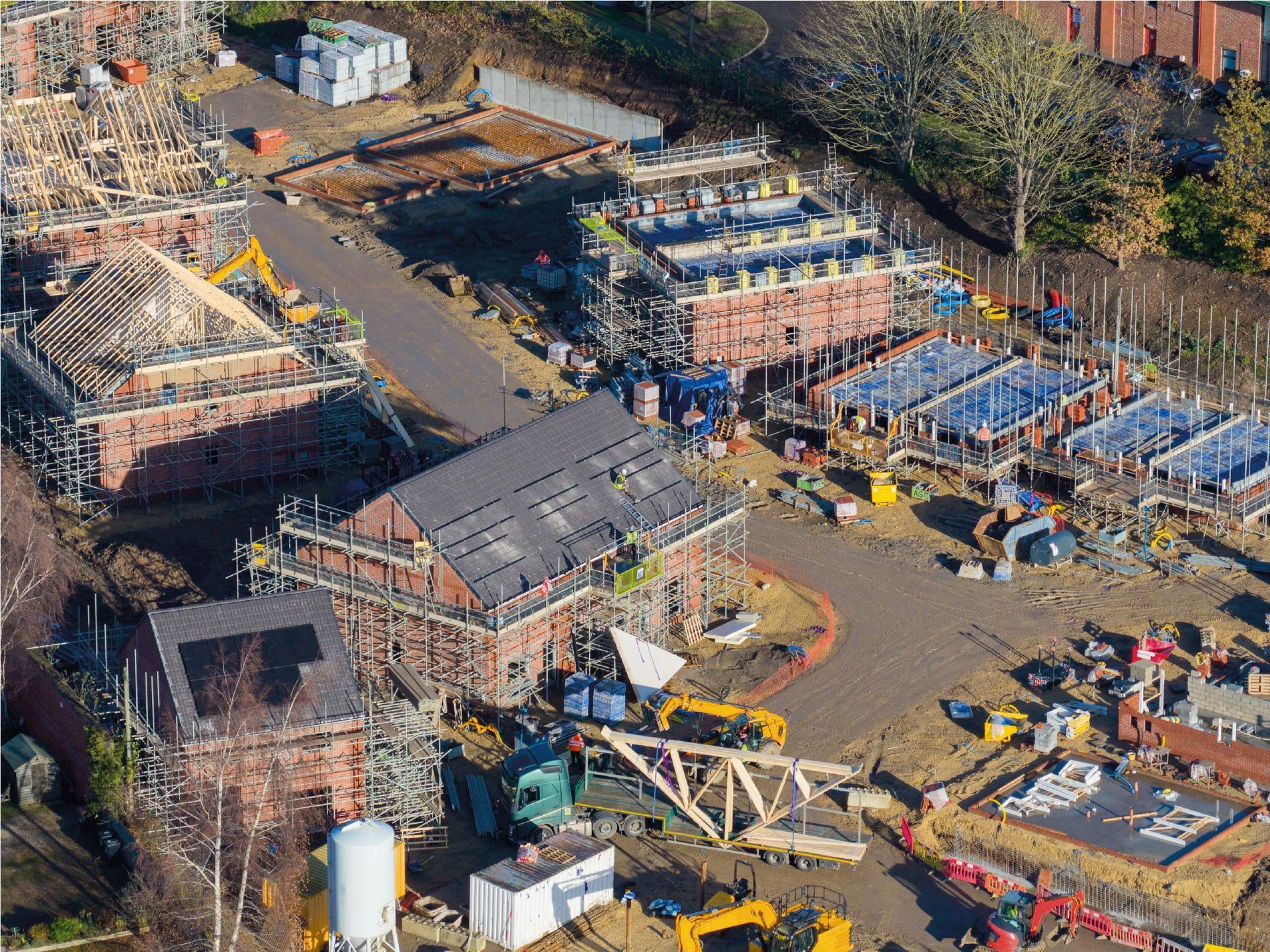
For builders and contractors working on back‑to‑back terraced schemes or dense urban infill developments, the same principle applies. The screed plant can be parked on the street or on a single access point while the pumped material snakes through corridors, stairwells and tight passages, minimising disruption to residents and other trades. That not only protects the site but also helps keep the programme on track, because the screed team is not slowed down by the need to move and reposition the truck multiple times or contend with locked gates and restricted access hours.
Inside multi‑storey buildings, the flexibility of the pump system really shines. Instead of relying on a separate crane‑hired pump or lorry‑mounted pump and hoping it can reach the required floor level, the mobile screed plant can be used in conjunction with a pumping line that extends vertically as well as horizontally. Clockwork Screed’s liquid screed can be pumped up to 100 m, allowing it to cover multiple storeys from a single setup, with the pipeline routed through stairwells or lift shafts as needed. This approach reduces the need for multiple truck movements, repetitive set‑ups and additional plant, which in turn keeps the site tidier and the project schedule tighter.
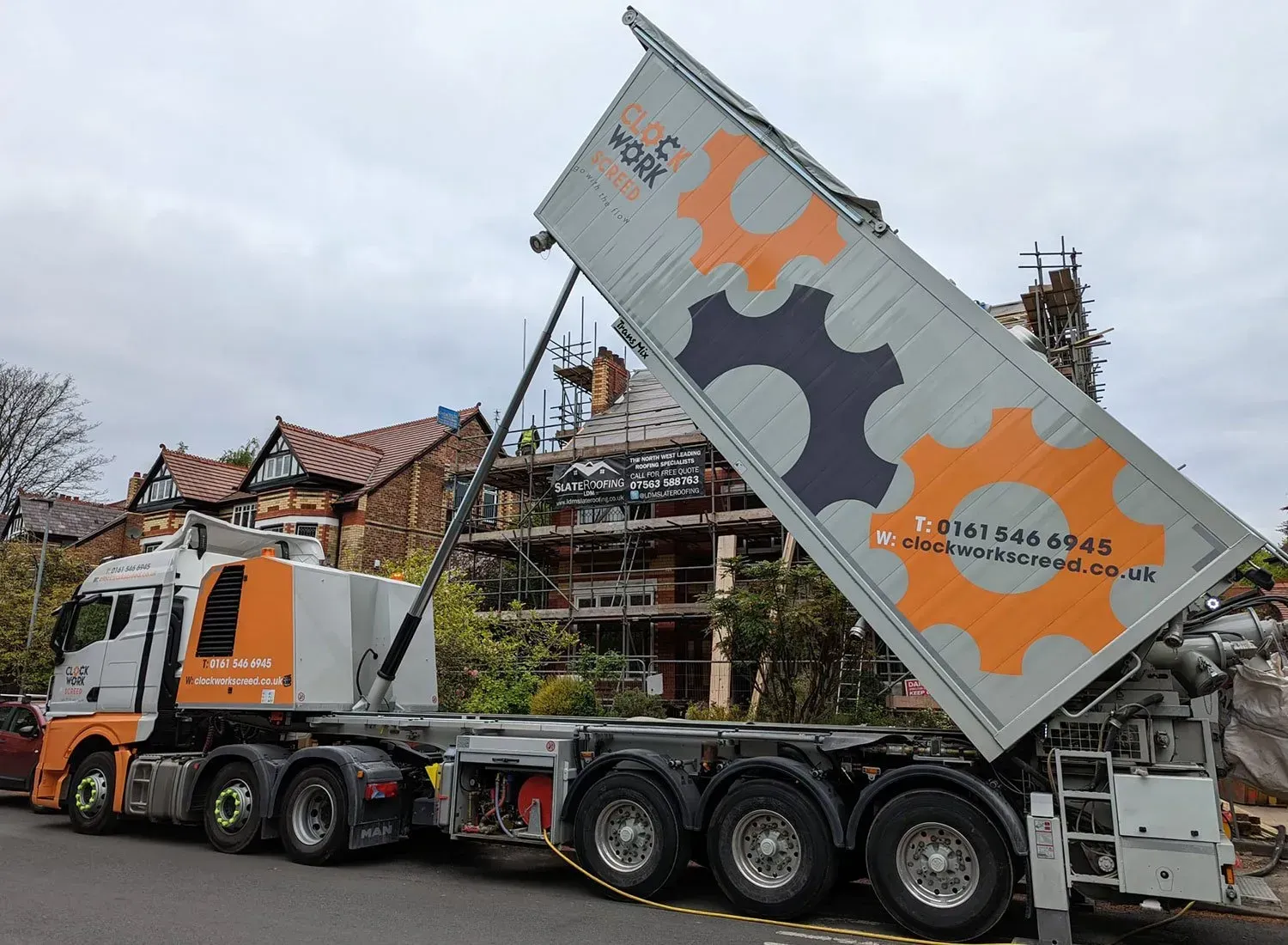
So why choose Clockwork Screed when so many suppliers can deliver screed to site? It comes down to the way the team works with the truck, the technology and the attention to detail that turns a tricky access job into a smooth, predictable floor package.
Why Clockwork Screed Is The Superior Choice
- A dedicated mobile screed plant that travels with the team, so the truck is not just a delivery vehicle but a complete on‑site batching and mixing unit.
- Ability to pump liquid screed up to 100 m from the truck, giving you reach on tight urban plots, multi‑storey buildings and live‑site refurbishments without damaging the slab.
- Continuous on‑site batching means we only produce what the floor actually needs, reducing waste, eliminating over‑ordering and cutting the risk of last‑minute top‑up loads.
- One team, one truck, one point of contact: the same specialists manage supply, mix, pumping and finishing, so there are no gaps in communication or accountability.
- Experience in awkward sites such as back‑to‑back terraces, infill developments and elevated locations (for example, Hyde Cricket Club’s practice pitch), where access is the main challenge.
- High‑output capacity, able to lay up to 1,000 m² of liquid screed in a single day, helping to keep tight programmes on track without compromising on finish quality.
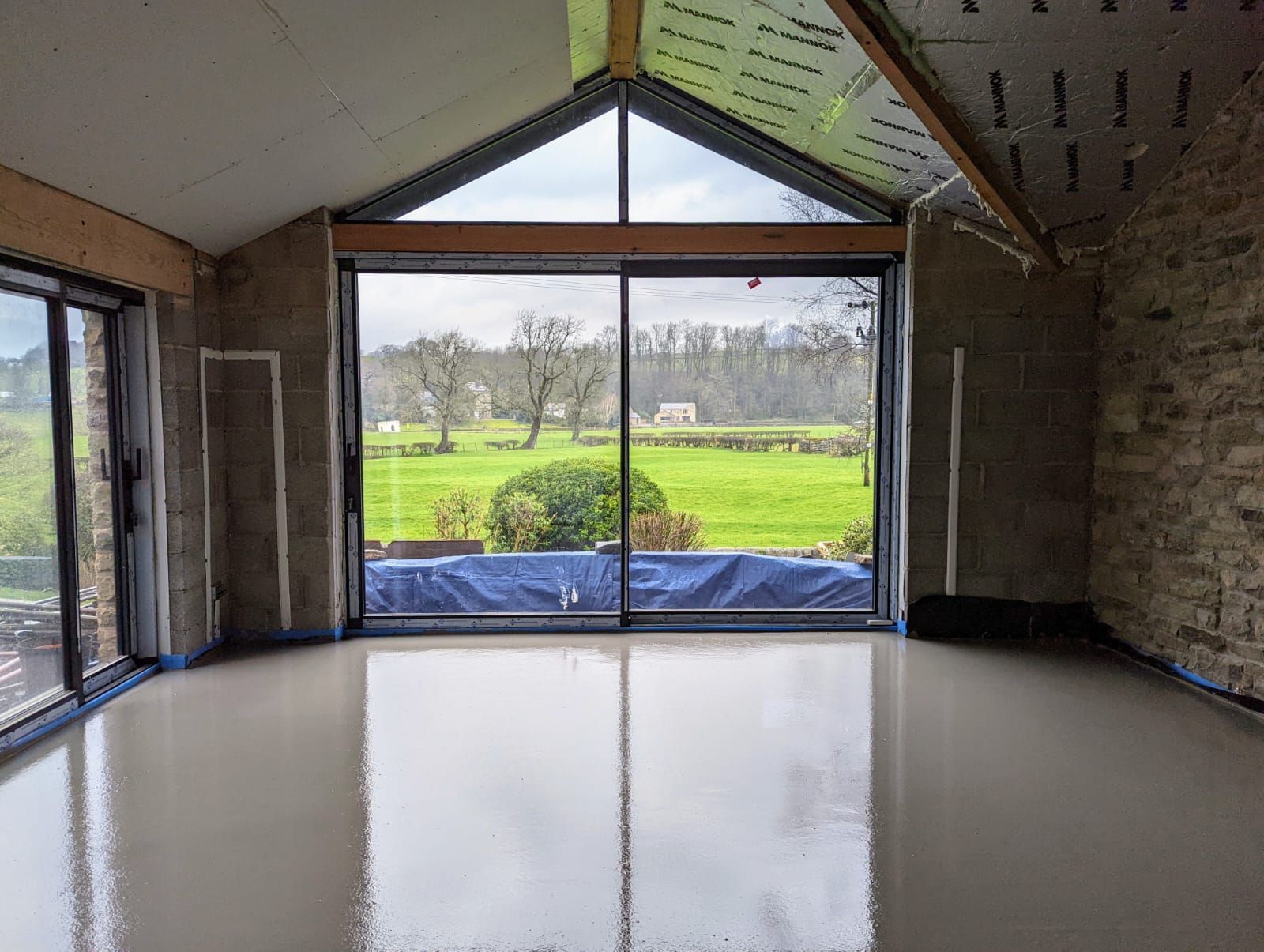
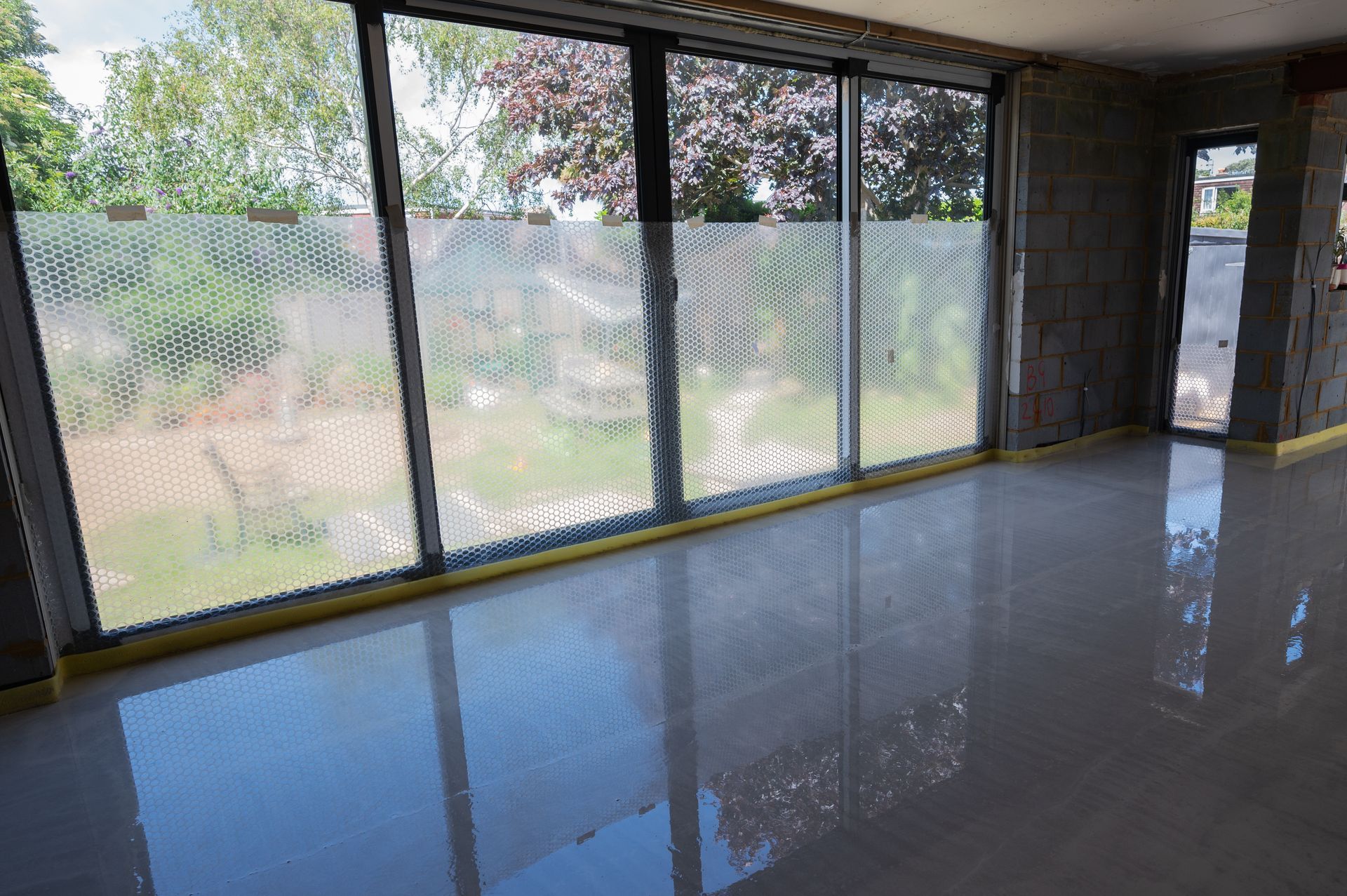
- Self levelling, self compacting liquid screed that delivers a flat, consistent surface suited to underfloor heating and a wide range of floor coverings, reducing callbacks and snagging.
By combining these strengths, Clockwork Screed turns access‑driven screed jobs into a reliable, low‑risk trade that keeps the rest of the project moving. Beyond the practical benefits of access, pumping screed over long distances also supports quality. The self levelling, self compacting properties of Clockwork’s liquid screed mean that it can be laid consistently across large areas, even on complex footprints, without the risk of segregation or uneven distribution that can occur with manual placement. The same team that controls the mix on the truck is responsible for placing and finishing the screed, ensuring that the material arrives at the pour point in the right condition every time. That consistency is crucial for projects where flatness, moisture control and compatibility with underfloor heating or floor coverings are key.
For clients and project managers, the ability to pump screed up to 100 m is not just a technical detail, it is a practical solution that impacts programme, cost and risk. It allows for faster, cleaner pours with fewer site movements, less wear and tear on the structure and reduced potential for damage to adjacent works. In a construction environment where access is often the limiting factor, Clockwork Screed’s mobile plant and long‑reach pump system offer a way to keep the floor package running smoothly, even on the most awkward sites.