What Happens When Floors Get Forgotten in the Design?
What Happens When Floors Get Forgotten in the Design?
Lessons from Site for 2026 Projects
Floors rarely get much attention early in a project, but they have a habit of becoming a major issue later on. By the time a team starts looking closely at insulation, screed depths, thresholds, underfloor heating and final floor finishes, the slab is often already in place and the programme is already under pressure.
That is one reason floor build-ups can become such a sticking point on live projects. What looks straightforward on a drawing can become far more complicated once services are installed, door levels are fixed, and the realities of access and sequencing begin to affect the job.
Why floors are often left too late
On many projects, the focus early on is naturally drawn to structure, envelope, services and major cost items. Floors can feel like something that will be “sorted later”, especially when the finished result appears simple: insulation, screed, floor finish, done.
In reality, the floor build-up sits at the intersection of several different trades and design decisions. It affects thermal performance, floor levels, door thresholds, accessibility, underfloor heating performance and the quality of the final finish, so even small oversights can have consequences well beyond the floor itself.
The problems that show up on site
The issues are often familiar. A floor finish changes and suddenly the build-up no longer works. A threshold detail is revised and there is not enough depth left. Underfloor heating is added or adjusted late, and the original screed allowance starts to look tight.
On refurbishment and extension projects, existing floor levels can also be uneven or inconsistent, making it harder to achieve a clean transition between old and new spaces.
When these questions are left unresolved for too long, the site team is left trying to recover the situation under time pressure. That can lead to extra layers being introduced, localised patching, awkward steps between spaces or last-minute compromises that nobody was aiming for at design stage.
Why this matters more in 2026
These issues are not new, but they are more significant in 2026 because projects are running with tighter margins for delay. Industry outlooks continue to point to programme pressure, labour constraints and the need to deliver with more certainty across refurbishment, fit-out and small works as well as larger schemes.
That means areas of the build once treated as routine now need more joined-up planning. A poorly considered floor build-up does not just create a technical issue; it can slow follow-on trades, complicate handovers and create avoidable remedial work at the point in the programme when time is shortest.
Where poured insulation and liquid screed fit in
This is where the conversation becomes more practical. A better floor solution is not always about adding more layers or forcing traditional methods to fit a changed situation. In many cases, the answer is to use systems that give the project more flexibility and more consistency.
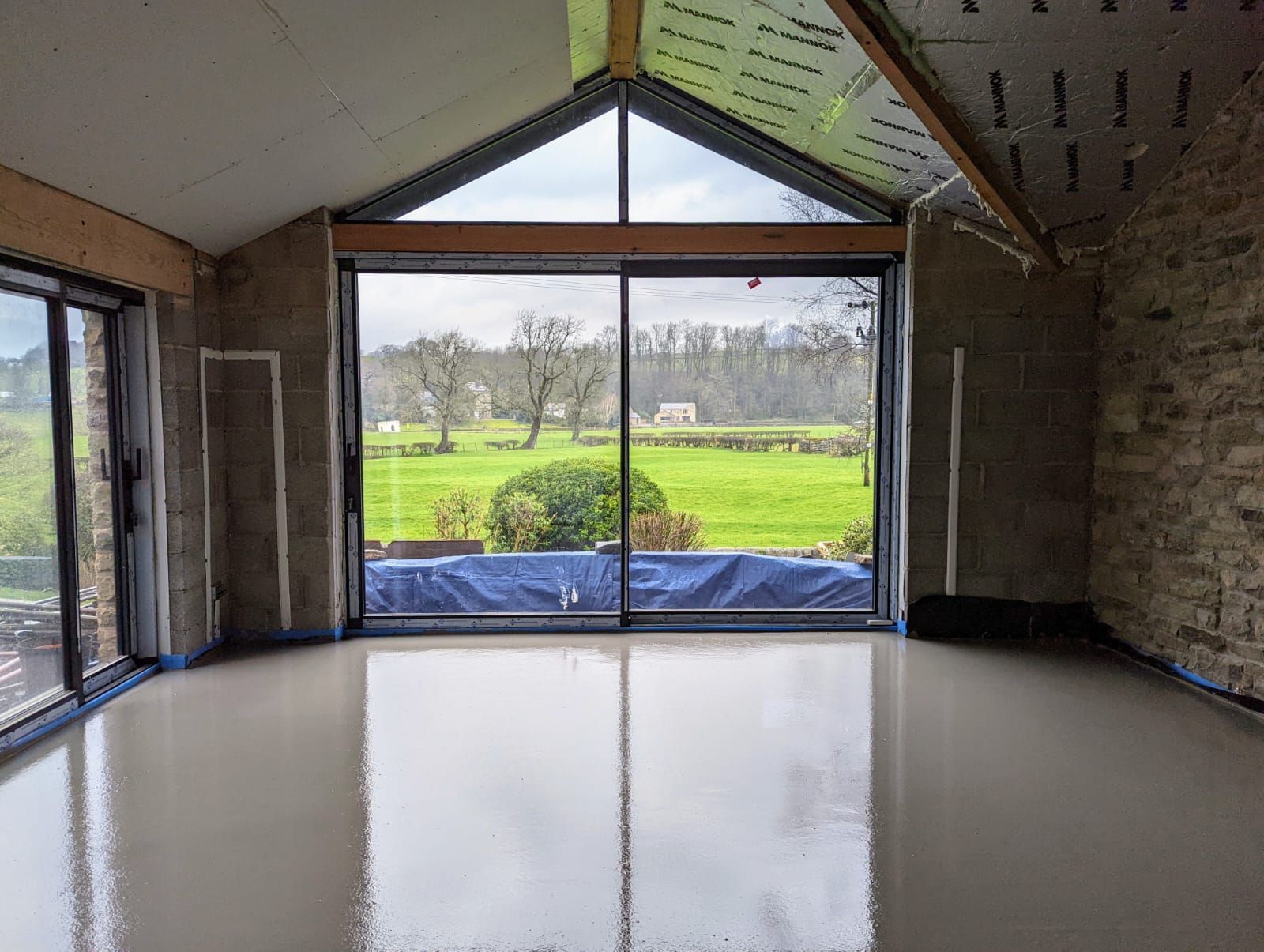
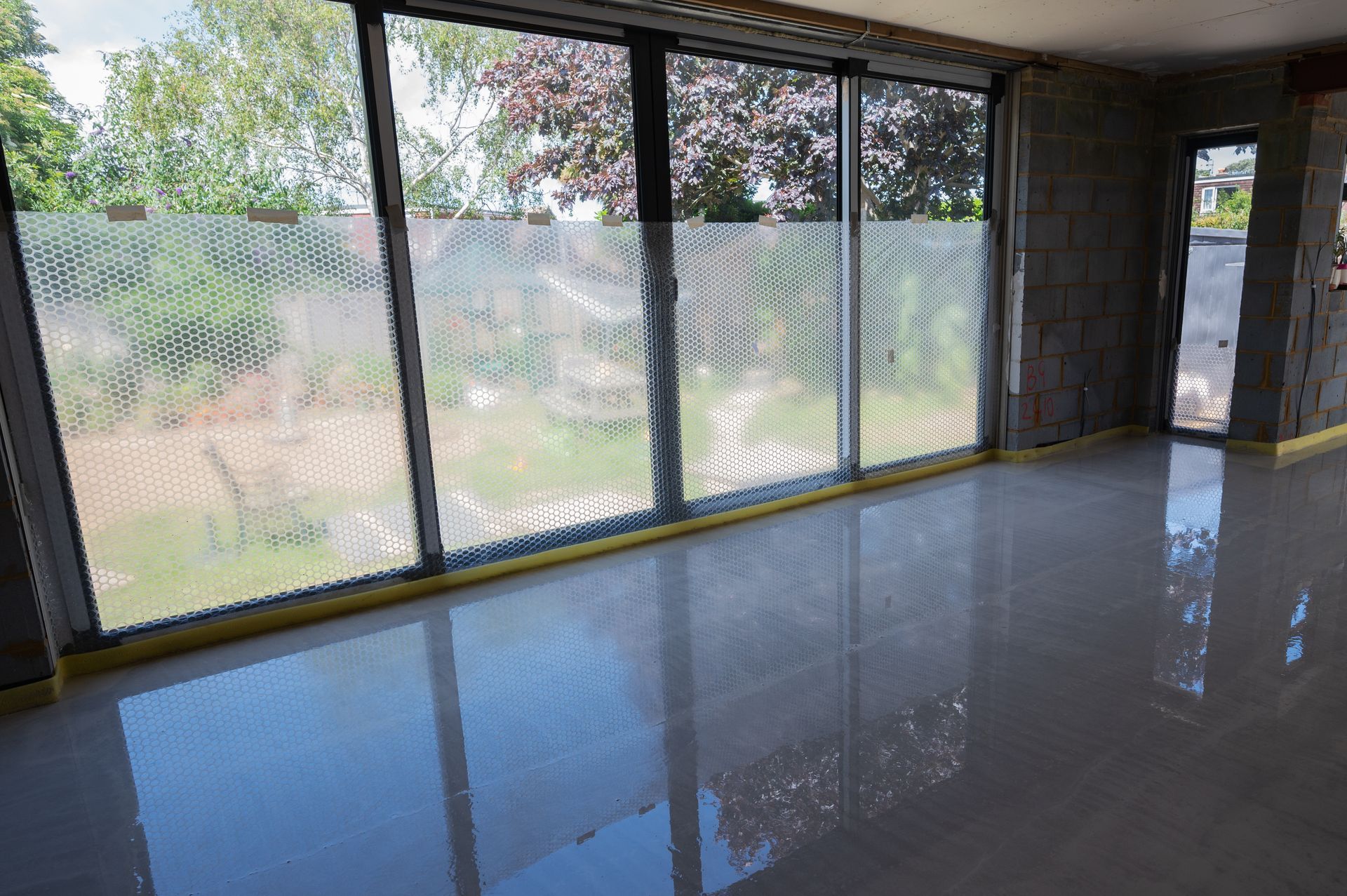
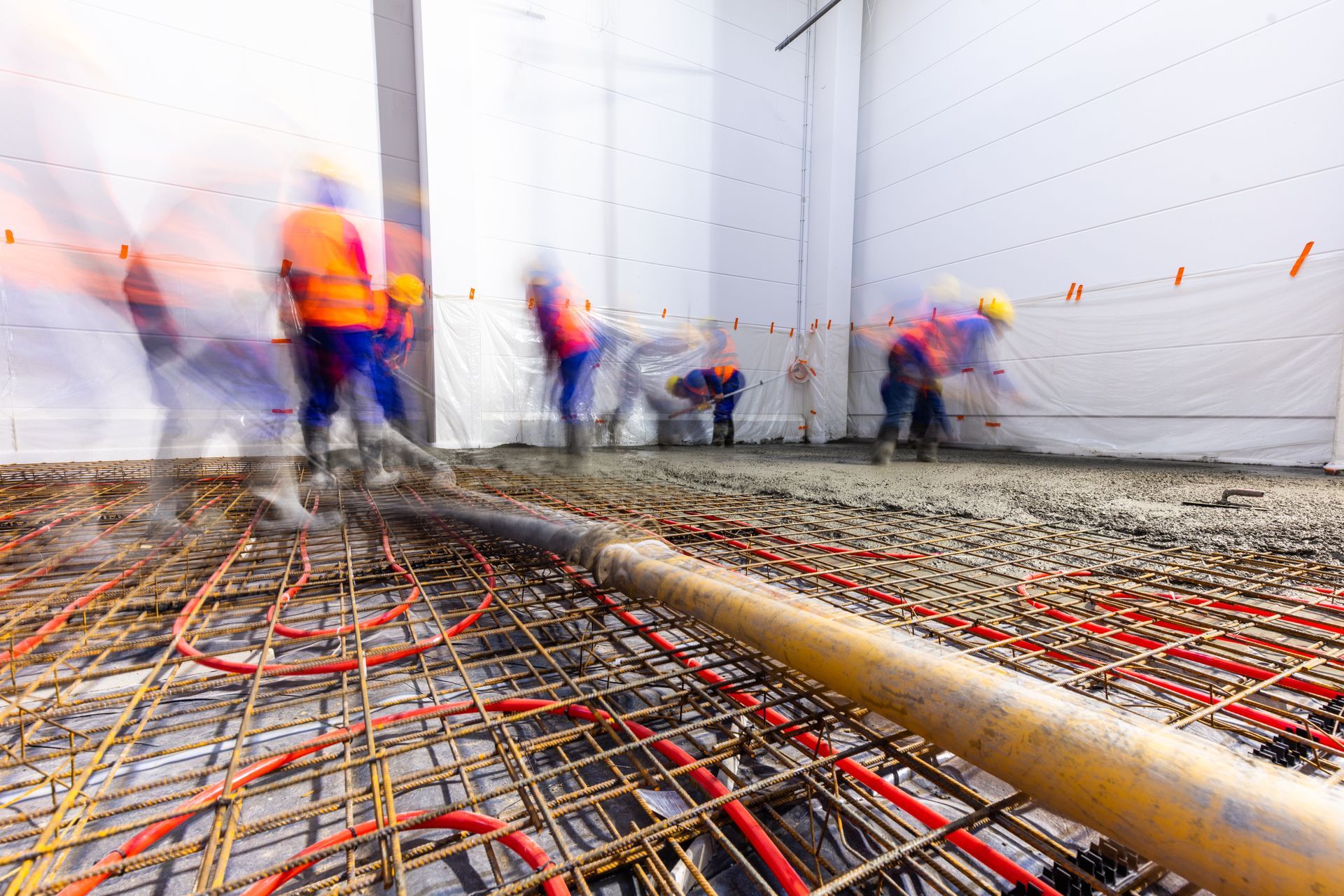
Poured insulation can help where substrates are uneven, where services complicate the build-up, or where a continuous insulating layer is needed without the waste and time involved in cutting rigid boards to fit awkward spaces. Liquid screed then builds on that by creating a level, self-smoothing surface that works well with underfloor heating and helps teams achieve a more uniform finish across the floor area.
Neither approach removes the need for good design, but both can make it easier to respond when the ideal sequence has not happened. That is particularly relevant on projects where the design has evolved, access is restricted or the site needs to keep moving while details are still being coordinated.

Access, sequencing and the reality of live work
Another reason floors get underestimated is that people often think about what is being installed, but not always how it will actually reach the point of installation. On schools, healthcare work, extensions, upper floors and tight urban plots, access can become as important as the specification itself.
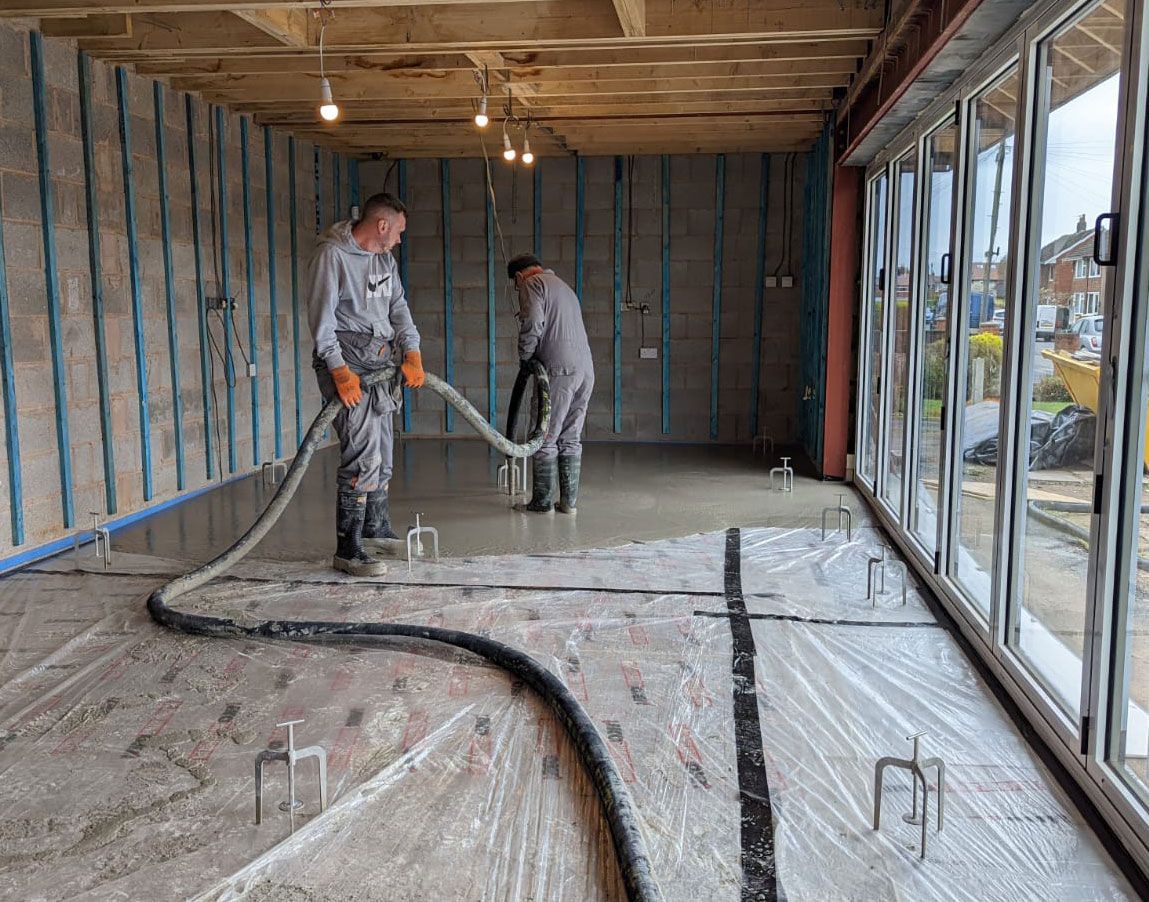
Pumped solutions change that conversation. Materials can be placed from a single point outside and delivered directly to the working area, reducing disruption, site traffic and the need to move large volumes of material through occupied or partially finished spaces. That can make a real difference on summer projects, when many teams are working in narrow holiday or shutdown windows and cannot afford drawn-out floor operations.
A better question to ask early
The most useful shift is often a simple one. Rather than asking “what screed are we using?” late in the process, it is better to ask much earlier: “how is this whole floor build-up going to work in practice?”
That means checking levels before they become a problem, coordinating insulation and heating properly, understanding access before the programme is fixed, and making sure the chosen build-up supports both performance and installation. Projects rarely run exactly as first imagined, but floors tend to work much better when they are treated as an important part of the design rather than something to be resolved at the last minute.
For 2026 projects, that mindset is becoming less of a nice extra and more of a necessity. A floor may not be the most visible part of a building, but when it has been thought through properly, the whole job tends to run more smoothly.